In this article
The year is 2026.
Everything has been digitalized.
Groceries? Delivered. Dates? Swiped. Your therapy session? Conducted from the couch. Even your next group of friends? There's an app for that. In a world that keeps finding new ways to bring people together digitally, it's safe to say the "meet new people" app market has…well and truly arrived.
Which is great, until you're staring at your phone trying to figure out which one to actually download. Because nothing says ‘modern socialising’ quite like spending 45 minutes researching apps instead of, you know, talking to someone.
Yup, good old decision fatigue can be the single most important hurdle to make your way over before you actually get to any of the IRL meeting required for making new connections.
Since Timeleft is in the business of taking the hassle out of things, we thought we'd go a step further and take the hassle out of the step *before* you make a booking too. Namely, figuring out which app is actually better for making friends: Timeleft vs Meetup?
We know the Reddit reviews exist. But we wanted to give you something a bit more well-rounded than a collection of anecdotes – a genuine, fair, and comprehensive comparison of the two, so you have the full picture before you commit. Below you'll find everything from pricing and group sizes to who each app is actually built for, and, most importantly, which one gives you the best shot at turning a new connection into someone you'd actually want to see again (AKA a friend).
TL;DR (if you’re in a hurry)
If you want hobby breadth and a free option, Meetup is a solid starting point for you. If you want to actually sit down with a small group of compatible (pre-matched) people and give friendship a real shot, Timeleft is quite literally built for that.
The difference isn't really about which app is "better" per se, it's about what you're trying to do, or what your intention is. Meetup is more of a discovery platform. Timeleft is all about forming lasting connections (more on that below).
But again, two very different products, two very different use cases.
Pick Meetup if you
- Have a specific hobby and want to find others who share it
- Want a free option and a large community to browse
- Already have a social base and want to grow it in one direction
Pick Timeleft if you
- Moved to a new city and want a social life from scratch
- Prefer a small, structured table over a large open event
- Love plans, but hate making them
What is Timeleft?
Timeleft is a subscription-based app that organises weekly in-person dinners (women-only included), drinks, coffees, and walks for small groups of people (4–6) who haven't met before. You sign up, take a short personality quiz, and get matched with five other members in your city. A day before the event, they’ll send you a preview of who you’ll be meeting. From there, Timeleft handles the venue, the booking, and the logistics, all you do is show up.
There are no bios, no swiping, no planning needed on your part…at all. The whole premise is built around one central idea, and that is that showing up is the single most important factor before connection can actually happen.
How does Timeleft work, exactly?
Sign up & take the quiz
Download the app and answer a few quick questions so we can match you with people who fit your vibe.
Book your experience
Choose dinner (women-only option too), drinks, coffee, or a walk, then pick a date and area that works for you.
Get your group
On the day, you'll get your venue and a preview of the people you'll meet.
Show up & connect
Arrive, find your seat, and watch the awkward first 5 mins turn into shared laughter…fast.
What is Meetup?
Meetup is an open platform where organisers (anyone, from community groups to hobbyist clubs to corporate teams) can create and host events. Members browse events by interest, location, and category, then RSVP to the ones that appeal to them. The whole premise around which it’s been built is to get new people to pursue their passions, together.
It's been around since 2002, it's free to attend most events (organisers pay to host), and it covers an enormous range of niches – hiking clubs, book groups, language exchanges, coding meetups, and everything in between.
The breadth here is genuinely impressive. If you have a specific hobby and want to find others who share it, Meetup is pretty hard to beat.
Timeleft vs Meetup (we love a comparison table)
Here's the side-by-side comparison table you need. We've tried to be as comprehensive as possible – as you’ll see, both products do different things well.
| Timeleft | Meetup | |
|---|---|---|
| Format | Structured small-group experience | Open events hosted by community organisers |
| Experience types | Dinners, women-only dinners, drinks, coffees and walks | Events around interests, from travel and the outdoors to hobbies and technology |
| Group size | 4–6 people per event | Varies, from 5 to 500 |
| Matching | Yes, by personality and interests | No, open RSVP, anyone can attend |
| Recurring | Weekly, same format, different (or the same) people | Depends on the organiser |
| Venue | Chosen, vetted and booked by Timeleft | Chosen by the organiser, quality varies |
| Pricing | Membership, from $27.99 a month in the US for new members. Your meal is paid separately | Free for most events. Organiser subscriptions from $29.99 a month |
| Best for | Forming connections with a small, matched group | Exploring interests and finding community around them |
| Repeat attendance | Yes, invite someone you clicked with to the next event | Depends on the group's recurring schedule |
| Members | 4M+ | 60M+ |
Okay but… for friendship specifically?
While both apps are great for meeting new people, something important to consider when comparing Timeleft vs Meetup are the conditions that actually produce friendships.
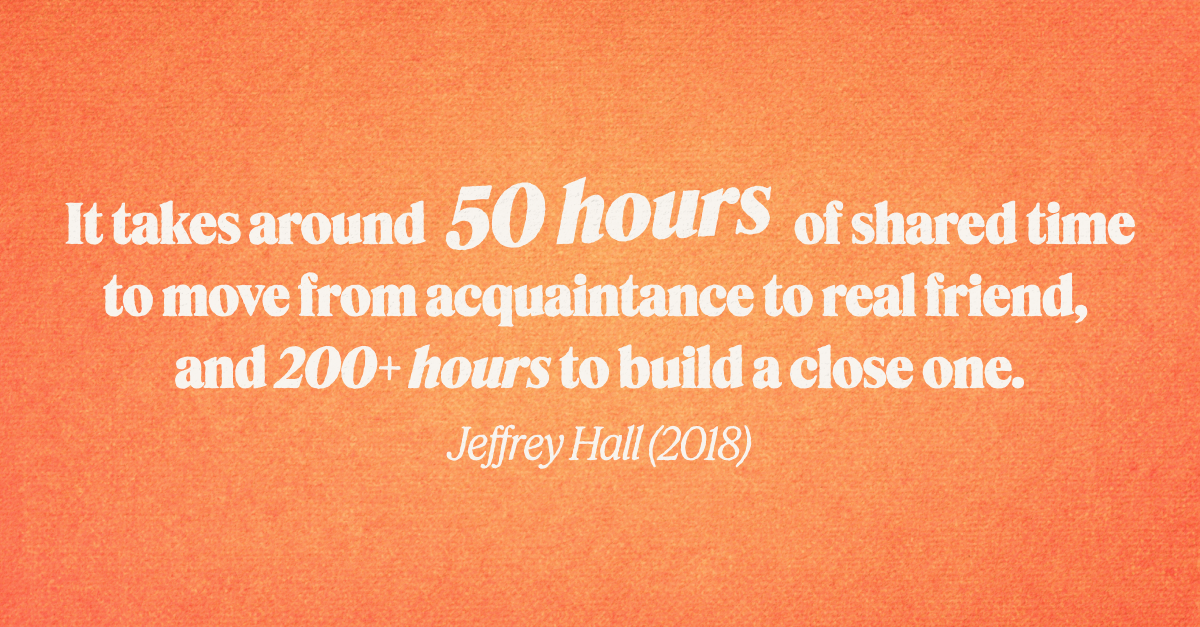
That's not one event – that's repeated, low-pressure time with the same people, which means the format you choose can make a real difference in this regard.
Large open-RSVP events (a Meetup with 40 people, say) are great for discovering a community. But the conditions needed for lasting friendships to form – small groups, repeated interaction, more room for vulnerability – are harder to create when you're one of many, and there's no built-in reason to see the same people again.
Timeleft is specifically designed around those conditions: 4–6 people, matched by personality, in a structured setting that naturally invites real conversation. The app even has a feature that lets you invite someone you connected with to your next gathering, so the friendship can keep growing and evolving. Neither approach is wrong… they just serve different stages of the social journey.
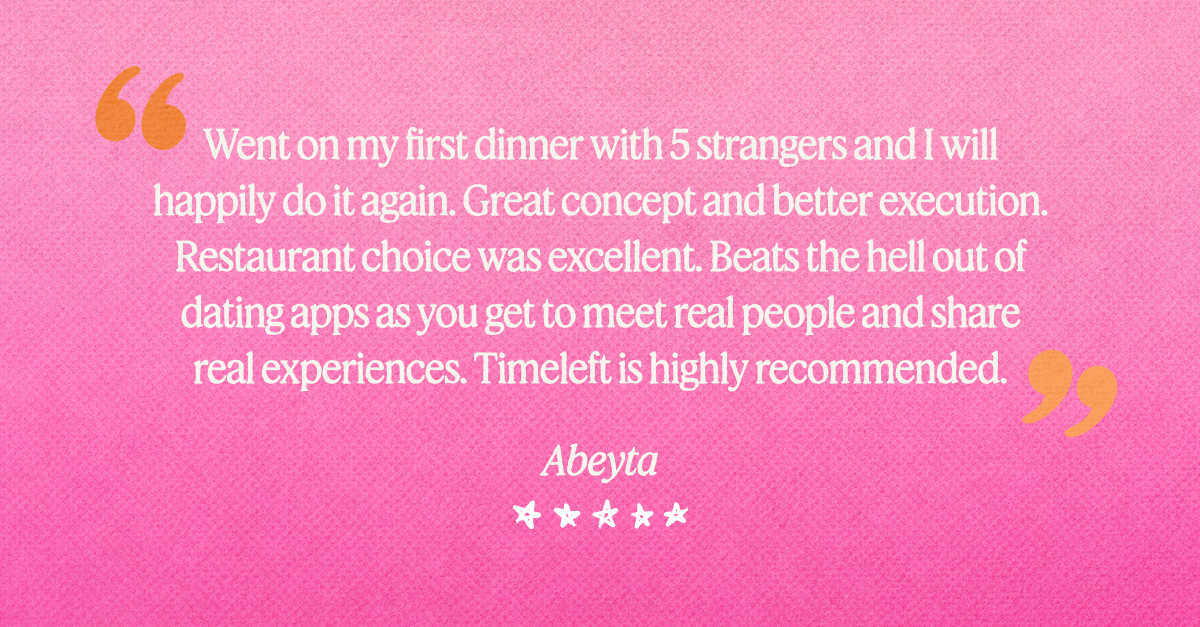
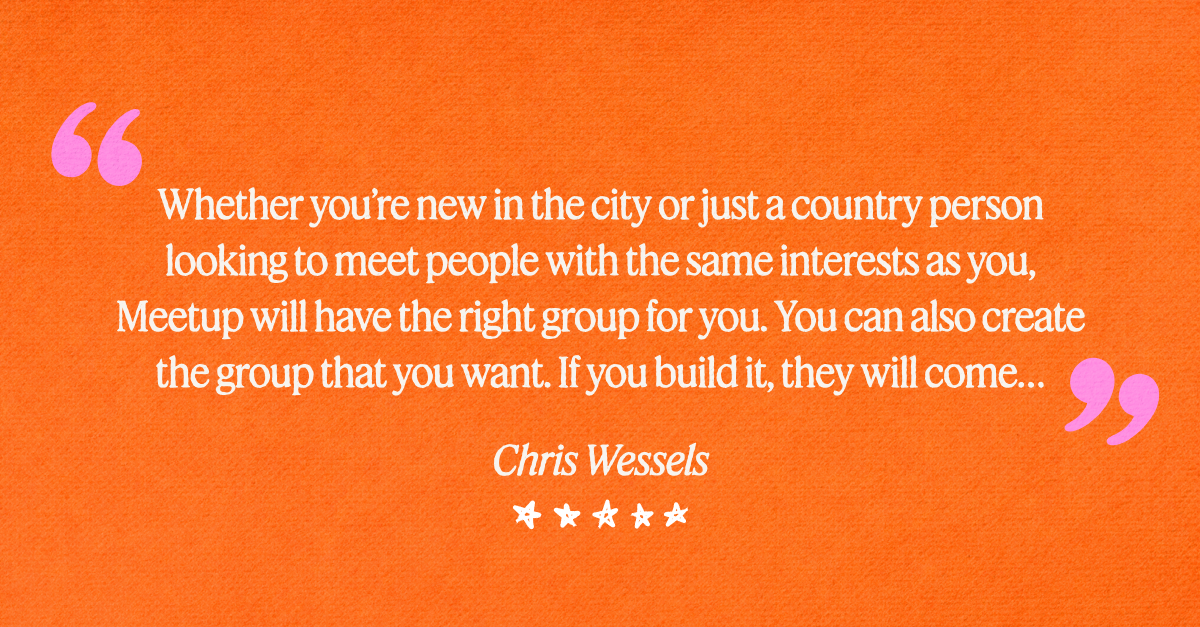
A word from people who've tried both
Who is Timeleft right for?
Timeleft tends to work best if you:
- Have moved to a new city and want to build a social life from scratch
- Are introverted (or extroverted) and prefer a small, structured setting over large open events
- Want to meet people outside your existing circle or industry
- Are in your 20s, 30s, 40s, 50s, or beyond and find spontaneous socializing harder to come by
- Have tried other apps or platforms and found the one-off format doesn't lead anywhere
- Love plans, but hate making them
The subscription model also creates a natural commitment, so that connecting with new humans every week becomes your new favourite ritual and new connections can deepen and grow.
Plus, what you're paying for is quality matching, pre-vetted venues, in-app conversation starters, effortless post-event communications (should you wish to), and the kind of weeknight you'd actually look forward to.
Who is Meetup right for?
Meetup genuinely shines if you:
- Have a specific hobby or interest and want to find others who share it
- Prefer to choose your events based on what you feel like doing that week
- Want a free option (although, certain things still require payment)
- Are looking for a larger community rather than a small curated group
- Want to meet people specifically in your line of business or industry
- Already have a decent social base and are looking to expand it in a specific direction
Basically, if you want to find the local LAN club, the board game night, or the tech start-up social scene in a specific city, then Meetup is a solid place to start. And if you've been searching for Meetup alternatives that put friendship formation front and centre rather than hobby discovery, that's where Timeleft comes in.
Is Timeleft worth it?
This depends entirely on what you're looking for. If you want a structured, low-effort way to meet compatible people in a small group, then yes, most Timelefters definitely agree that it’s worth it. The format removes most of the friction that makes adult socializing so exhausting – no planning, and no uncertainty about whether the person next to you also wants to make friends.
Also, if you show up once and don't find your people instantly, that's not failure – that's just how meeting people works. And hey, at least you’ve discovered (and supported) a new local restaurant, bar, or cafe. Plus, Timeleft's weekly format means there's *always* a next one (next week).
And how much does it cost?
A Timeleft membership costs $27.99 a month in the US for new members, or $65.99 for three months (prices vary by country, and the app shows yours before you pay). That gives you unlimited access to weekly dinners, drinks, coffees, and walks in your city – so you're not paying per event, you're paying for the ability to show up as often as you like (huge win).
Food and drinks at venues are paid separately, the same as any other hang.
Compared to a typical night out in most cities, a monthly subscription to Timeleft costs roughly the same as a couple of cocktails. And for regular Timelefters, the per-event cost works out to much less.
Also, when all Timelefters are paying to be on the app, it means that everyone on there is serious about showing up, and there for the same reason as you are.
The verdict is in… are you?
Timeleft and Meetup are genuinely different products solving overlapping problems. Meetup gives you breadth – a huge range of interest-based events, a free entry point, and a community to browse. Timeleft gives you structure – a small, matched group, a venue handled for you, and a format specifically designed around the conditions that encourage real connections and friendships to grow.
If you're trying to find your hobby tribe, Meetup is worth exploring. If you're trying to make real, lasting connections (the sit-down, real-conversation, see-you-again kind) then Timeleft is your best bet.
The invitation is open. Every Wednesday (and most other days of the week, depending on your city). All you have to do is show up. So the only question left worth asking is…
You in?
FAQ
What is the difference between Timeleft and Meetup?
Timeleft is a structured, matchmaking-based platform that places you in a group of 4–6 pre-matched people for a weekly dinner, drinks, coffee, or walk. Everything – the venue, the group, the logistics – is handled for you. Meetup is an open platform where organisers host events and members RSVP freely. The key difference is that Timeleft is designed specifically for friendship formation through small, recurring, matched groups. Meetup is designed for community discovery and hobby-based connection.
How does Timeleft work?
You download the app, answer a short personality quiz, and subscribe. Then you book the experience you want (dinner, women-only dinner, drinks, coffee, or a walk) and pick a date and area. On the day, you receive your venue and a preview of your group. You show up, sit down, and meet your people. Conversation starters are available in-app to help break the ice if needed.
How much does Timeleft cost?
In the US, a Timeleft membership costs $27.99 a month for new members, or $65.99 for three months, with a 12-month plan too. This gives you unlimited access to all weekly events in your city. Food, drinks, and any venue costs are paid separately.
Is Timeleft worth it?
For most people who show up consistently, yes. The format is specifically designed for the conditions that produce real, long-lasting connections – small groups, personality matching, repeated interaction. The weekly schedule means there's always another chance, and the subscription keeps you committed to showing up.
Is Meetup safe?
Generally yes. Meetup events are typically held in public spaces, and the platform has community guidelines in place. As with any platform involving meeting strangers in person, standard common-sense precautions apply: meet in public, let someone know where you're going, and trust your instincts. Timeleft takes a similar approach, with all events held at vetted public venues.